
Moving to 400G? Here's How to Make the Right Call on Connectivity
Most data centers are either already upgrading to 400G or actively planning for it. The business case is clear — more bandwidth, faster transmission, lower cost per bit. But once you've committed to that direction, there's a decision that doesn't always get the attention it deserves: how you actually connect everything together.
The right choice depends on your environment, your priorities, and your budget. Get it right and you'll have a network that performs exactly as expected. Get it wrong and you'll be dealing with limitations you didn't see coming. Here's what you need to know.
Start with your requirements
Before looking at any specific product, get clear on what actually matters for your deployment:
- Reach — how far does the signal need to travel?
- Latency — how time-sensitive are your applications?
- Power consumption — what are your energy and thermal constraints?
- Cost — upfront investment vs. total cost of ownership
- Flexibility — how tight are the cable runs and rack spaces you're working with?
- BER (Bit Error Rate) — what level of signal integrity do you need?
- Security — do you have requirements around electromagnetic security?
The two dominant 400G transceiver form factors you'll encounter are QSFP-DD and OSFP. Both are widely available and well supported — your choice between them will usually come down to your host equipment and density requirements.
Your connectivity options
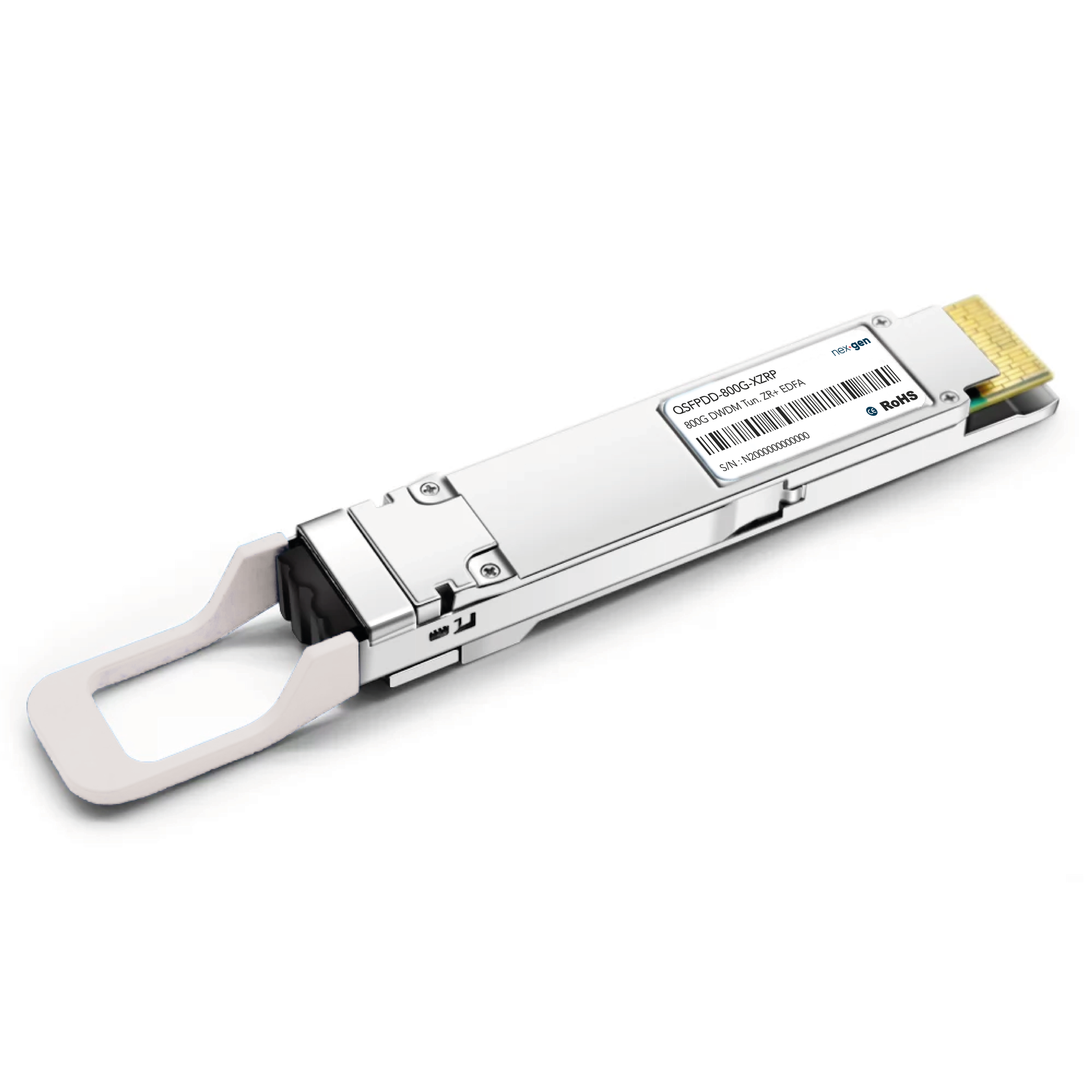
Transceivers with fiber cabling
If distance is your primary requirement, transceivers are the answer. They outperform every other option on reach — covering anywhere from 100m to 10km depending on the variant — and they're the go-to choice for long-haul or inter-building links.
The trade-off is cost. Transceivers are the most expensive option in this lineup, and they require separate fiber cabling on top of that. For applications where reach is non-negotiable, it's a cost worth paying. For shorter runs, there are better options.
AOCs — Active Optical Cables
AOCs are pure fiber cables with transceivers integrated at each end, and they're one of the most popular choices for data center interconnects. They're lightweight, compact, and capable of reaching up to 80m — further than either AECs or DACs.
Where AOCs have traditionally taken heat is on latency and power. A DSP-based AOC introduces around 120 nanoseconds of latency and draws more power than copper alternatives. Nexgen's analog CDR-based AOCs change that equation significantly — latency drops to just 20 nanoseconds, and power consumption comes down to 7.6W per cable end, making them genuinely competitive for latency-sensitive applications like HPC and supercomputing.
Cost sits between DACs and standalone transceivers — you're paying more than copper, but considerably less than a discrete transceiver plus cable.
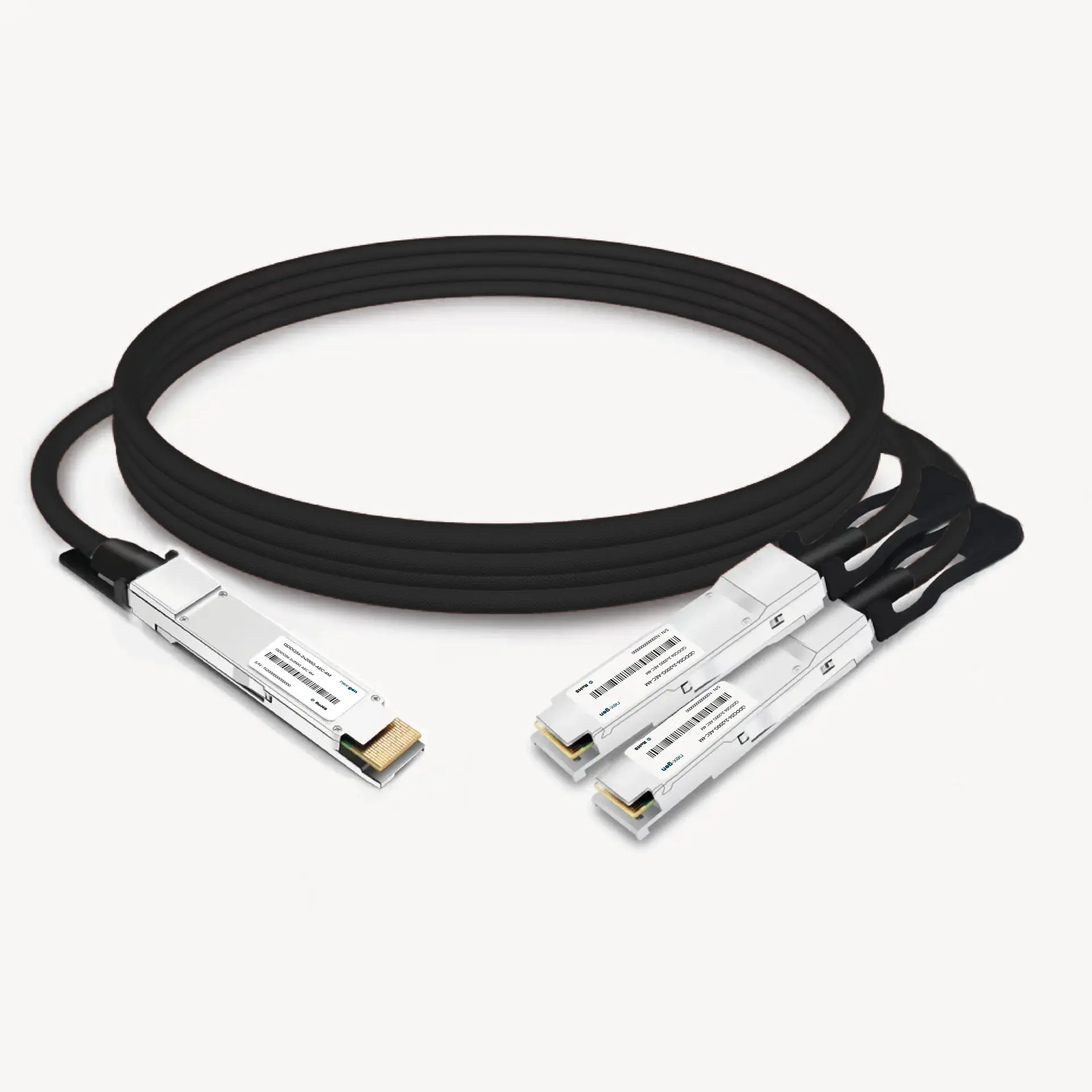
AECs — Active Electrical Cables
AECs are a relatively new addition to the connectivity lineup and a genuinely interesting one. They're a hybrid design — fiber and copper combined — that manages to deliver some of the best characteristics of both.
At 4 nanoseconds of latency, they're the fastest option in the bunch. Power consumption is 4.4W per cable end, making them the most energy-efficient active option. They reach up to 7 meters, which covers a lot of typical rack-to-rack scenarios, and they're smaller and easier to handle than DACs. Compatibility with host electronics is generally excellent too, which tends to make initial deployment smoother.
The catch is reach — 7 meters is the ceiling, so if your cabling runs go further than that, you'll need to look elsewhere.
DACs — Direct Attach Cables
DACs are copper through and through, and that shapes everything about them — the good and the less good.
On the plus side, they're the cheapest option available, they consume the least power of any active solution, and they have inherently low latency. If you're connecting equipment within the same rack or adjacent racks and cost is the primary driver, DACs are hard to argue with.
The downsides are real though. Copper is heavier — DACs typically weigh about two and a half times more than AECs — and they're harder to route in tight spaces. Electromagnetic interference limits their reach more than fiber-based options, and they don't offer the inherent electronic security that fiber provides. For short runs where none of that matters, they're a solid workaround. For anything beyond that, you'll quickly hit their limits.
How to choose
There's no single right answer here — it genuinely depends on what you're building. A rough guide:
- Need long reach? → Transceiver with fiber cabling
- Need low latency for HPC or supercomputing? → Nexgen analog AOC or AEC
- Prioritizing energy efficiency in a short run? → AEC
- Tight budget, short runs, latency not critical? → DAC
Nexgen's 400G portfolio covers all of these scenarios. If you're not sure which direction makes sense for your specific deployment, our team is happy to work through it with you.